
Srimad Bhagavad Gita | Elixir of Eternal Wisdom

We have no choice whether to act or withdraw. Our choice is only in knowing that we are not the doer and being an instrument of the Divine. (1.31)
*
This world that is seen is impermanent; it cannot give us constant pleasure. It will ultimately grant us pain. True happiness, fulfilment, can be had only in our heart—the Self. Find it, and here and now, you are at peace. (1.33)
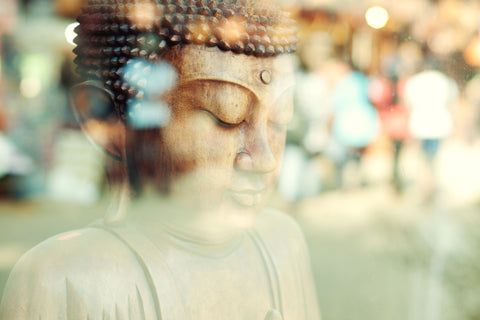
Once, Prince Siddhartha was taken through the city and villages by the blessed charioteer Chaanna. The youthful prince was bubbling with joy and was full of optimism about life. But on the way, the first sight was that of a crippled person. Next was a dead body, and then an old man tottering with his stick.
“Disease, old age and death… O dear Chaanna, what are these!”
“That is the life of the world, O Lord.”
......
“Is there any way to be free?”
“Dear prince, behold there, under the tree lies the solution…”

Once there were two monks—a Guru and a śishya—who lived in seclusion in a forest. One day, the disciple visited a nearby village and came back and reported that he saw the villagers fight among themselves. As he was not used to the ways of the world, he was perplexed as to why they were fighting. On hearing this, the master snatched the śishya’s kamaṇḍalu and said, “This is mine.” The śishya replied happily, “Yes, Guruji, please take it. It is yours.” The Guru smiled at the innocence of the disciple and said, “Dear child, if you do not have a possessive attitude (my‑ness), it is impossible to explain to you the cause of conflict. There is no way you will even understand why fighting happens in the world. This ‘my-ness’ is the cause of all sorrows and conflicts.”
~ An excerpt from Srimad Bhagavad Gita | Elixir of Eternal Wisdom by Sri Nochur Acharya

When we speak, and God listens, it is prayer; when God speaks, and we listen, it is meditation.
But as long as we continue to speak, God will not open his mouth. Only when we stop our chatter and surrender to Him completely will He start to speak.
When the Lord speaks and we listen, that is the Gita.

Meditation is the most elevating spiritual practice. A mind that is sufficiently purified through bhakti and yoga gains deep introversion. The mind that was used to flowing towards the objects of the world through the senses, now gets habituated to turn inward towards the Heart. This state of mind is the real meditative state, referred to as antarmukha—inner-faced. This is indeed the impact of Divine Grace. In this state, the mind begins to sense the Divine within. Renouncing its affinity to the seen, the introverted mind starts sensing the seer within. The power of pure Consciousness—Chit—starts playing upon the mind. This touch of pure Awareness, the Gita calls Brahma-samsparśa. This bestows profound happiness—atyantam sukham.
From here begins the yogi’s real journey of meditation on the Atman, nididhyāsana. A mind that has gained sufficient purity senses the inner Self naturally.

The purpose of this commentary is to constantly remind the seeker that what he seeks is within him—the pure jñāna-mārga as revealed by the Upanishads and great sages like Sri Sankaracharya and Bhagavan Ramana Maharshi. Some commentators have opined that the Gita speaks about karma, and some others have said that it talks about yoga, but the Gitacharya Himself says, “iti te jñānam ākhyātam—here I have expounded jñānam.”
In the Bhagavata too, Vyasa says, “That which was given by Bhagavan in the war-field is pure jñāna.” Of course, karma-yoga is given much importance by the Gita. Without that, it is not possible to attain sufficient purity to intuit our real nature. That aspect is also given importance in the commentary. The chief intention behind every exposition in this commentary is to turn the mind inward and to make one recognise the most incredible treasure within. Once it is recognised, everything else will happen harmoniously in such a life. This is the greatest spiritual truth.